


 Send Inquiry
Tetrachlorophthalic Anhydride
Tetrachlorophthalic Anhydride Specification
- Purity
- 99%
- Solubility
- SLIGHTLY SOLUBLE IN ETHER, SLIGHTLY SOL IN WATER.
- Shelf Life
- 1 Years
- Poisonous
- YES
- Appearance
- White powder
- Grade
- Industrial
- Molecular Formula
- C8Cl4O3
- Density
- 1.49 Kilogram per cubic meter (kg/m3)
- CAS No
- 117-08-8
- Usage
- It is used as a flame retardant in epoxy resin, plastics, paper and textiles. It is also used as an intermediate to produce pharmaceuticals, dyes, Pigments, pesticides, plasticizers, and other organic compounds.
- Shape
- Granules
- Molecular Weight
- 285.90 Grams (g)
- Melting Point
- 253 - 256 C
- Physical Form
- Powder
- Product Type
- industrial
- Application
- Industrial
- HS Code
- 29173920
- Properties
- off White powder
Tetrachlorophthalic Anhydride Trade Information
- Minimum Order Quantity
- 25 Kilograms
- FOB Port
- MUMBAI
- Payment Terms
- Cash on Delivery (COD), Telegraphic Transfer (T/T), Cash in Advance (CID), Cheque, Cash Advance (CA)
- Supply Ability
- 10000 Kilograms Per Month
- Delivery Time
- 1 Days
- Packaging Details
- 25 kg plastic bag.
- Main Domestic Market
- All India
About Tetrachlorophthalic Anhydride
Accessible in colorless crystalline or off white powder form, Tetrachlorophthalic Anhydride is used as suitable fire retarding factor during production of epoxy resin, textile material etc. As an effective intermediate, this chemical is required to formulate pesticides, various organic compounds, pigments and plasticizers. Its application can also be noticed in electronic and electroplating arena. This toxic chemical slightly dilutes in water and ether. Tetrachlorophthalic Anhydride has 253 degree C to 256 degree C melting point range. This chemical is offered in 25 kg plastic bag and it can be stored for 12 months.
Features:
- CAS No. : 117-08-8
- M.F. C8Cl4O3
- M.W.285.90
- Packing 25 kg plastic bag
- Appearance : white crystalline powder
- Purity 99% min.
This item is considered a hazardous material. It is used as a flame retardant in epoxy resin, plastics, paper and textiles. It is also used as an intermediate to produce pharmaceuticals, dyes, Pigments, pesticides, plasticizers, and other organic compounds.
Versatile Application Across Industries
Tetrachlorophthalic Anhydride is widely favored in manufacturing due to its exceptional flame-retardant properties. Its use spans several industries, including plastics, textiles, epoxies, pharmaceuticals, and dye production. Its high purity and consistent quality make it a preferred choice among distributors and suppliers seeking reliable results in industrial processes.
Safety Considerations and Handling
As a poisonous substance, Tetrachlorophthalic Anhydride requires careful management. Users must adhere to safety guidelines, including protective equipment and proper storage conditions. Vendors supply this compound in controlled packaging to minimize risks. Its one-year shelf life allows for sufficient usage cycle while maintaining product integrity and safety.
FAQs of Tetrachlorophthalic Anhydride:
Q: How is Tetrachlorophthalic Anhydride commonly used in industrial settings?
A: Tetrachlorophthalic Anhydride is primarily used as a flame retardant in manufacturing epoxy resins, plastics, textiles, and paper. It also functions as an intermediate in the synthesis of pharmaceuticals, dyes, pigments, pesticides, and plasticizers.Q: What precautions should be taken when handling this product due to its poisonous nature?
A: Since Tetrachlorophthalic Anhydride is poisonous, handlers should wear appropriate protective gear, work in well-ventilated spaces, and follow strict safety protocols to avoid inhalation or skin contact. Proper storage and disposal procedures must also be observed.Q: Where is Tetrachlorophthalic Anhydride typically distributed from?
A: Tetrachlorophthalic Anhydride is distributed, exported, supplied, and traded by wholesalers and suppliers, with China being a significant source for industrial-grade product.Q: What are the benefits of using Tetrachlorophthalic Anhydride as a flame retardant?
A: Using Tetrachlorophthalic Anhydride as a flame retardant enhances safety and durability in finished goods, particularly in plastics, textiles, and resins, by reducing their flammability and compliance with safety standards.Q: When is the optimal shelf life period to use Tetrachlorophthalic Anhydride for best results?
A: This compound has a shelf life of one year; it is recommended to use it within this period to maintain its effectiveness, purity, and safety.Q: What is the physical appearance and grade specification of this product?
A: Tetrachlorophthalic Anhydride appears as an off-white to white powder in granule form, and is supplied in industrial grade with a high purity of 99%.Q: How is Tetrachlorophthalic Anhydride processed into end products like dyes and pigments?
A: Tetrachlorophthalic Anhydride serves as a chemical intermediate, undergoing specific organic reactions to synthesize dyes, pigments, and other compounds as dictated by targeted industrial processes.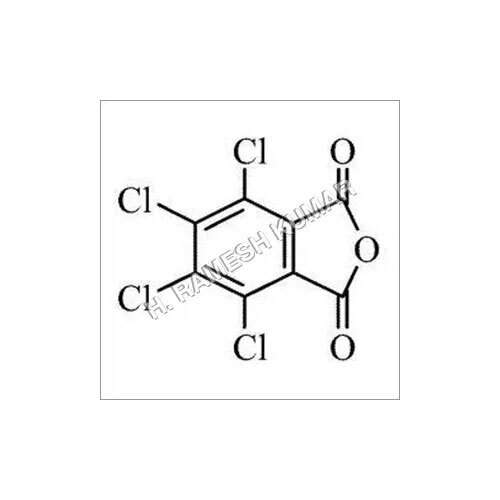

Price:
- 50
- 100
- 200
- 250
- 500
- 1000+


- D2/13, Vipul Mitra, Pragati Nagar, off L.T. Road No.6, off M.G. Road, Goregaon W,Mumbai - 400104, Maharashtra, India
- Phone : 07971191487

- Mr Rameshkumar Harlalka (Proprietor)
- Mobile : 07971191487
-
 Send Inquiry

 Send Inquiry
 Send Inquiry
 Send SMS
Developed and Managed by Infocom Network Private Limited.
